A Game-Based Cognitive Measurement of Inhibitory Control
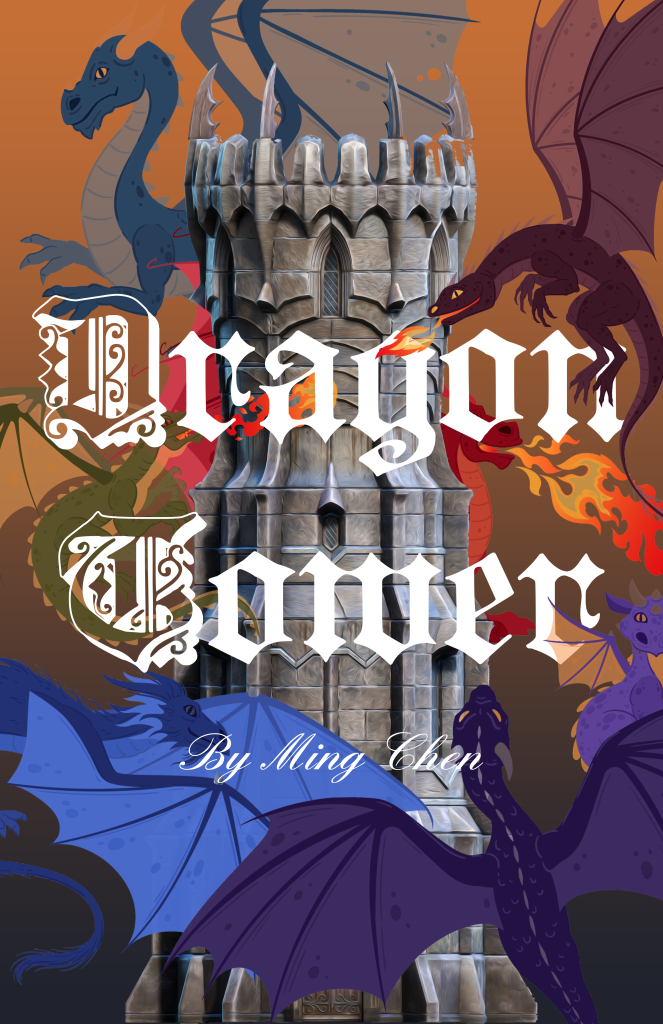
Dragon Tower Remaster is a fast-paced fantasy action game that explores how traditional cognitive assessment can be transformed into a more engaging and meaningful play experience.
Originally developed as a research prototype for my doctoral work, Dragon Tower was later redesigned and polished into a more complete indie game experience with improved gameplay flow, visual presentation, feedback systems, and difficulty progression.
Gameplay
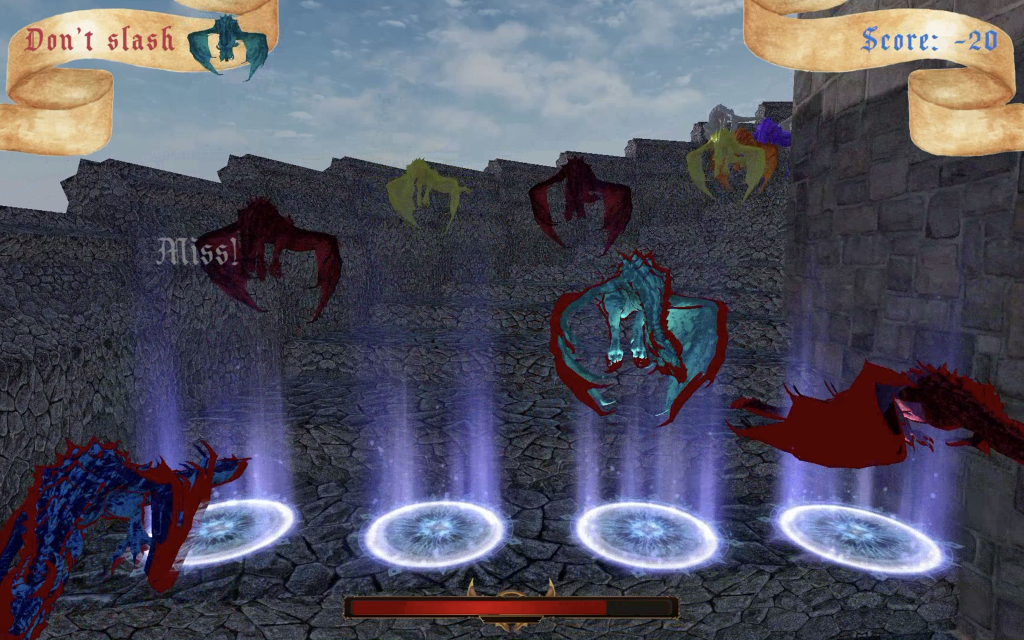
Colorful dragons descend along a magical tower while the player controls four portals using the D, F, J, and K keys.
Players must quickly activate the correct portal to capture each dragon—but there is a catch:
One dragon color is prohibited and must not be captured.
The prohibited color changes periodically, requiring players to continuously:
- Identify incoming dragons
- Match dragons to the correct portal
- React quickly to valid targets
- Suppress impulsive responses to prohibited dragons
- Adapt as the rules and difficulty change
As the game progresses, dragons move faster and appear in increasingly challenging sequences, creating a balance between speed, accuracy, attention, and self-control.
Game-Based Cognitive Measurement
Dragon Tower is designed around cognitive inhibition, an executive function that allows people to suppress inappropriate or impulsive responses.
Instead of asking players to respond to abstract symbols in a traditional cognitive task, the game embeds those same cognitive demands within meaningful gameplay.
Player performance can generate measures such as:
- Reaction time
- Response accuracy
- Missed targets
- Incorrect captures
- Responses to prohibited dragons
- Performance changes as difficulty increases
This allows gameplay itself to become a source of behavioral data.
From Research Prototype to Remaster
The original Dragon Tower was created as part of my research on using games to measure executive functions.
For the remastered version, I focused on turning the experimental prototype into a more polished and enjoyable standalone game while preserving the cognitive mechanisms at the center of the research.
The project demonstrates how game design, psychology, and data-driven assessment can come together to create experiences that are both engaging to play and meaningful to study.
Development
Role: Solo Developer, Designer & Researcher
Engine: Unity
Genre: Action / Game-Based Cognitive Measurement
Focus: Executive Function, Inhibitory Control & Player Performance
I designed and developed the gameplay mechanics, cognitive measurement systems, difficulty progression, player feedback, data collection, and overall game experience.
Showcases
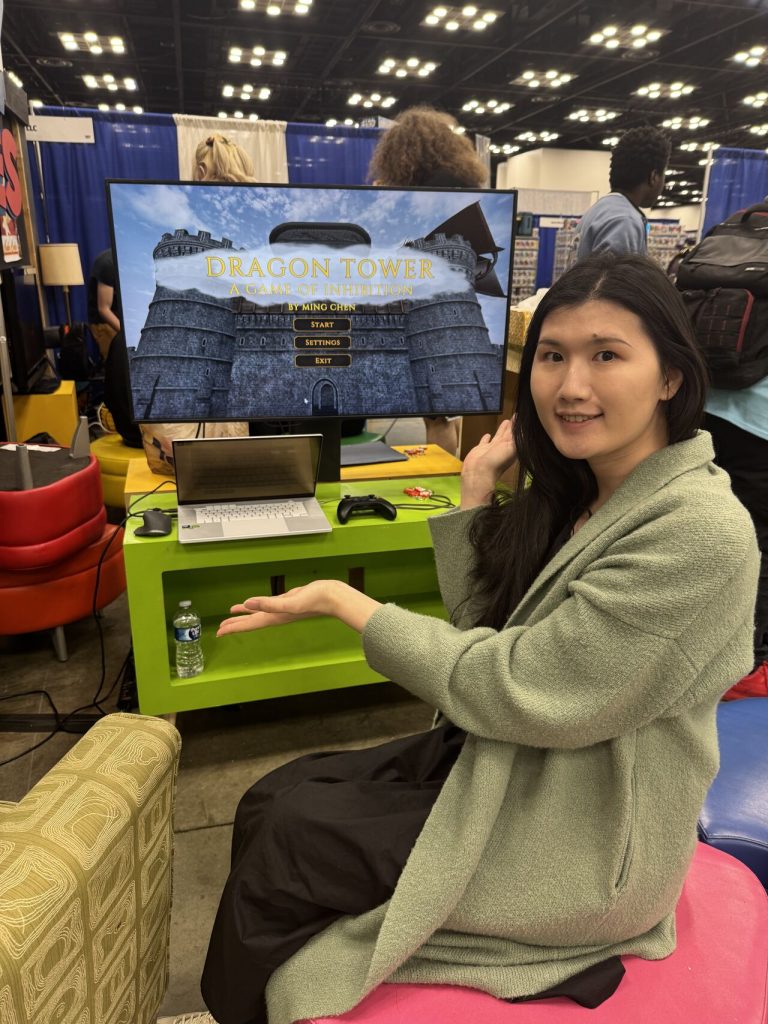
Dragon Tower Remaster was presented as an indie game at PopCon 2026 and was selected for showcase at Meaningful Play 2026 at Carnegie Mellon University.